A little note on communication: All designers are concerned with communication. Designers use a variety of visual languages that have there own codes and conventions to express ideas. These ideas can be expressed both/either consciously and/or unconsciously. John Fiske has stated that there ‘are broadly two types of definition of communication. The first sees it as a process by which A sends a message to B upon whom it has an effect. The second sees it as a negotiation and exchange of meaning in which messages, peoples-in-cultures and ‘reality’ interact so as to enable meaning to occur’ (O’Sullivan, 1994, p. 50).
I have in previous posts discussed the Internet and the World Wide Web as communication tools and as social condensers. From Soviet constructivist theory, the social condenser is a spatial idea practiced in architecture. Central to the idea of the social condenser is the premise that architecture has the ability to influence social behaviour (as discussed in Shock of the New episode 4, “Trouble in Utopia”). It may be argued that the ‘architecture’ of the WWW, a ‘public space’, breaks down perceived social hierarchies and creates an environment that allows and encourages disparate groups and communities to interact. We can explore how real and virtual communities formed and sustained. In 1997 Microsoft set up a project: ‘MSN Street’ in which the residents of a North London road were given computers and free access to the Internet.
These communication technologies can impact on communities in many different ways. In the rural Western Isles of Scotland, this communication technology is used to keep traditional communities together. It also helps to develop new communities: today we may think of My Space or Second Life amongst many others.
Tom Standage the author of The Victorian Internet (1998), points to the features common to both the telegraph networks of the 19th Century and today’s Internet (Standage was on the reading list for Week one of Media Technologies and Public spheres). He compares them both in terms of the speed of communication, their commercial possibilities, the utopian notion of connectivity and the transcendence of national and political boundaries. These viewpoints are not too dissimilar to Marshall McLuhan’s (1911-80) claim that the new electronic media would restore our sense of community and collectivity creating what he called a ‘global village’.
However communication is not simply about information, surely? Is it not about social grooming and our increasing ability to talk might not have been (or should that be just been?)about helping one another understand the world, but a guard against lying.
Further reading:
Bell, David J. [et al.], Cyberculture: the key concepts London: Routledge, 2004 303.4834 bel
Kiesler, Sara (ed) Culture of the Internet Mahwah, N.J: Lawrence Erlbaum Associates, Publishers, 1997
Nayar, Pramod K. Virtual worlds: culture and politics in the age of cybertechnology
New Delhi London Thousand Oaks: Sage Publications, 2004
O’Sullivan, T et al, Key Concepts in Communication and Cultural Studies London: Routledge, 1994 2002
Preece, Jenny, Online communities: designing usability, supporting sociability New York: Wiley, 2000 e
Spender, Dale Nattering on the net: women, power and cyberspace North Melbourne: Spinifex, 1995
Websites:
Tom Standage’s Home Page: www.tomstandage.com
Showing posts with label history. Show all posts
Showing posts with label history. Show all posts
Sunday, 21 February 2010


Plato's Cave
Many texts on cyberspace and cyberculture seem to reference this story from Plato's famous book:
Book VII of The Republic
The Republic
Written 360 B.C.E
The Allegory of the Cave
[Socrates is speaking with Glaucon]
[Socrates:] And now, I said, let me show in a figure how far our nature is enlightened or unenlightened: --Behold! human beings living in a underground den, which has a mouth open towards the light and reaching all along the den; here they have been from their childhood, and have their legs and necks chained so that they cannot move, and can only see before them, being prevented by the chains from turning round their heads. Above and behind them a fire is blazing at a distance, and between the fire and the prisoners there is a raised way; and you will see, if you look, a low wall built along the way, like the screen which marionette players have in front of them, over which they show the puppets.
[Glaucon:] I see.
And do you see, I said, men passing along the wall carrying all sorts of vessels, and statues and figures of animals made of wood and stone and various materials, which appear over the wall? Some of them are talking, others silent.
You have shown me a strange image, and they are strange prisoners.
Like ourselves, I replied; and they see only their own shadows, or the shadows of one another, which the fire throws on the opposite wall of the cave?
True, he said; how could they see anything but the shadows if they were never allowed to move their heads?
And of the objects which are being carried in like manner they would only see the shadows?
Yes, he said.
And if they were able to converse with one another, would they not suppose that they were naming what was actually before them?
Very true.
And suppose further that the prison had an echo which came from the other side, would they not be sure to fancy when one of the passers-by spoke that the voice which they heard came from the passing shadow?
No question, he replied.
To them, I said, the truth would be literally nothing but the shadows of the images.
That is certain.
And now look again, and see what will naturally follow if the prisoners are released and disabused of their error. At first, when any of them is liberated and compelled suddenly to stand up and turn his neck round and walk and look towards the light, he will suffer sharp pains; the glare will distress him, and he will be unable to see the realities of which in his former state he had seen the shadows; and then conceive some one saying to him, that what he saw before was an illusion, but that now, when he is approaching nearer to being and his eye is turned towards more real existence, he has a clearer vision, -what will be his reply? And you may further imagine that his instructor is pointing to the objects as they pass and requiring him to name them, -- will he not be perplexed? Will he not fancy that the shadows which he formerly saw are truer than the objects which are now shown to him?
Far truer.
And if he is compelled to look straight at the light, will he not have a pain in his eyes which will make him turn away to take and take in the objects of vision which he can see, and which he will conceive to be in reality clearer than the things which are now being shown to him?
True, he said.
And suppose once more, that he is reluctantly dragged up a steep and rugged ascent, and held fast until he 's forced into the presence of the sun himself, is he not likely to be pained and irritated? When he approaches the light his eyes will be dazzled, and he will not be able to see anything at all of what are now called realities.
Not all in a moment, he said.
He will require to grow accustomed to the sight of the upper world. And first he will see the shadows best, next the reflections of men and other objects in the water, and then the objects themselves; then he will gaze upon the light of the moon and the stars and the spangled heaven; and he will see the sky and the stars by night better than the sun or the light of the sun by day?
Certainly.
Last of he will be able to see the sun, and not mere reflections of him in the water, but he will see him in his own proper place, and not in another; and he will contemplate him as he is.
Certainly.
He will then proceed to argue that this is he who gives the season and the years, and is the guardian of all that is in the visible world, and in a certain way the cause of all things which he and his fellows have been accustomed to behold?
Clearly, he said, he would first see the sun and then reason about him.
And when he remembered his old habitation, and the wisdom of the den and his fellow-prisoners, do you not suppose that he would felicitate himself on the change, and pity them?
Certainly, he would.
And if they were in the habit of conferring honours among themselves on those who were quickest to observe the passing shadows and to remark which of them went before, and which followed after, and which were together; and who were therefore best able to draw conclusions as to the future, do you think that he would care for such honours and glories, or envy the possessors of them? Would he not say with Homer,
Better to be the poor servant of a poor master, and to endure anything, rather than think as they do and live after their manner?
Yes, he said, I think that he would rather suffer anything than entertain these false notions and live in this miserable manner.
Imagine once more, I said, such an one coming suddenly out of the sun to be replaced in his old situation; would he not be certain to have his eyes full of darkness?
To be sure, he said.
And if there were a contest, and he had to compete in measuring the shadows with the prisoners who had never moved out of the den, while his sight was still weak, and before his eyes had become steady (and the time which would be needed to acquire this new habit of sight might be very considerable) would he not be ridiculous? Men would say of him that up he went and down he came without his eyes; and that it was better not even to think of ascending; and if any one tried to loose another and lead him up to the light, let them only catch the offender, and they would put him to death.
No question, he said.
This entire allegory, I said, you may now append, dear Glaucon, to the previous argument; the prison-house is the world of sight, the light of the fire is the sun, and you will not misapprehend me if you interpret the journey upwards to be the ascent of the soul into the intellectual world according to my poor belief, which, at your desire, I have expressed whether rightly or wrongly God knows. But, whether true or false, my opinion is that in the world of knowledge the idea of good appears last of all, and is seen only with an effort; and, when seen, is also inferred to be the universal author of all things beautiful and right, parent of light and of the lord of light in this visible world, and the immediate source of reason and truth in the intellectual; and that this is the power upon which he who would act rationally, either in public or private life must have his eye fixed.
Book VII of The Republic
The Republic
Written 360 B.C.E
The Allegory of the Cave
[Socrates is speaking with Glaucon]
[Socrates:] And now, I said, let me show in a figure how far our nature is enlightened or unenlightened: --Behold! human beings living in a underground den, which has a mouth open towards the light and reaching all along the den; here they have been from their childhood, and have their legs and necks chained so that they cannot move, and can only see before them, being prevented by the chains from turning round their heads. Above and behind them a fire is blazing at a distance, and between the fire and the prisoners there is a raised way; and you will see, if you look, a low wall built along the way, like the screen which marionette players have in front of them, over which they show the puppets.
[Glaucon:] I see.
And do you see, I said, men passing along the wall carrying all sorts of vessels, and statues and figures of animals made of wood and stone and various materials, which appear over the wall? Some of them are talking, others silent.
You have shown me a strange image, and they are strange prisoners.
Like ourselves, I replied; and they see only their own shadows, or the shadows of one another, which the fire throws on the opposite wall of the cave?
True, he said; how could they see anything but the shadows if they were never allowed to move their heads?
And of the objects which are being carried in like manner they would only see the shadows?
Yes, he said.
And if they were able to converse with one another, would they not suppose that they were naming what was actually before them?
Very true.
And suppose further that the prison had an echo which came from the other side, would they not be sure to fancy when one of the passers-by spoke that the voice which they heard came from the passing shadow?
No question, he replied.
To them, I said, the truth would be literally nothing but the shadows of the images.
That is certain.
And now look again, and see what will naturally follow if the prisoners are released and disabused of their error. At first, when any of them is liberated and compelled suddenly to stand up and turn his neck round and walk and look towards the light, he will suffer sharp pains; the glare will distress him, and he will be unable to see the realities of which in his former state he had seen the shadows; and then conceive some one saying to him, that what he saw before was an illusion, but that now, when he is approaching nearer to being and his eye is turned towards more real existence, he has a clearer vision, -what will be his reply? And you may further imagine that his instructor is pointing to the objects as they pass and requiring him to name them, -- will he not be perplexed? Will he not fancy that the shadows which he formerly saw are truer than the objects which are now shown to him?
Far truer.
And if he is compelled to look straight at the light, will he not have a pain in his eyes which will make him turn away to take and take in the objects of vision which he can see, and which he will conceive to be in reality clearer than the things which are now being shown to him?
True, he said.
And suppose once more, that he is reluctantly dragged up a steep and rugged ascent, and held fast until he 's forced into the presence of the sun himself, is he not likely to be pained and irritated? When he approaches the light his eyes will be dazzled, and he will not be able to see anything at all of what are now called realities.
Not all in a moment, he said.
He will require to grow accustomed to the sight of the upper world. And first he will see the shadows best, next the reflections of men and other objects in the water, and then the objects themselves; then he will gaze upon the light of the moon and the stars and the spangled heaven; and he will see the sky and the stars by night better than the sun or the light of the sun by day?
Certainly.
Last of he will be able to see the sun, and not mere reflections of him in the water, but he will see him in his own proper place, and not in another; and he will contemplate him as he is.
Certainly.
He will then proceed to argue that this is he who gives the season and the years, and is the guardian of all that is in the visible world, and in a certain way the cause of all things which he and his fellows have been accustomed to behold?
Clearly, he said, he would first see the sun and then reason about him.
And when he remembered his old habitation, and the wisdom of the den and his fellow-prisoners, do you not suppose that he would felicitate himself on the change, and pity them?
Certainly, he would.
And if they were in the habit of conferring honours among themselves on those who were quickest to observe the passing shadows and to remark which of them went before, and which followed after, and which were together; and who were therefore best able to draw conclusions as to the future, do you think that he would care for such honours and glories, or envy the possessors of them? Would he not say with Homer,
Better to be the poor servant of a poor master, and to endure anything, rather than think as they do and live after their manner?
Yes, he said, I think that he would rather suffer anything than entertain these false notions and live in this miserable manner.
Imagine once more, I said, such an one coming suddenly out of the sun to be replaced in his old situation; would he not be certain to have his eyes full of darkness?
To be sure, he said.
And if there were a contest, and he had to compete in measuring the shadows with the prisoners who had never moved out of the den, while his sight was still weak, and before his eyes had become steady (and the time which would be needed to acquire this new habit of sight might be very considerable) would he not be ridiculous? Men would say of him that up he went and down he came without his eyes; and that it was better not even to think of ascending; and if any one tried to loose another and lead him up to the light, let them only catch the offender, and they would put him to death.
No question, he said.
This entire allegory, I said, you may now append, dear Glaucon, to the previous argument; the prison-house is the world of sight, the light of the fire is the sun, and you will not misapprehend me if you interpret the journey upwards to be the ascent of the soul into the intellectual world according to my poor belief, which, at your desire, I have expressed whether rightly or wrongly God knows. But, whether true or false, my opinion is that in the world of knowledge the idea of good appears last of all, and is seen only with an effort; and, when seen, is also inferred to be the universal author of all things beautiful and right, parent of light and of the lord of light in this visible world, and the immediate source of reason and truth in the intellectual; and that this is the power upon which he who would act rationally, either in public or private life must have his eye fixed.
Weblinks
Here are some useful sites dealing with Digital Culture:
Multimedia: From Wagner to Virtual Reality: About the book
Multimedia: From Wagner to Virtual Reality: The Companion Website
The Virtual Revolution: The BBC 2 Series
Multimedia: From Wagner to Virtual Reality: About the book
Multimedia: From Wagner to Virtual Reality: The Companion Website
The Virtual Revolution: The BBC 2 Series
Wednesday, 17 February 2010
William Henry Fox Talbot

Photogenic drawing. C. 1835
 Two delicate plant fronds Photogenic drawing negative, likely 1839.
.jpg)
Wrack: From the "Bertoloni Album," 1839 Photogenic drawing

Wild Fennel, 1841–42
 Pattern of seeds of dandelion? or milkweed? Photographic engraving, mid 1850s.
Tuesday, 16 February 2010
Robert Rauschenberg

Robert Rauschenberg Untitled (Glossy Black Painting), ca. 1951; painting; oil and paper on canvas.
The painting featured above is very similar to the pieces that I have been producing. However the aims of Rauschenberg's approach or at least some of the the results may be different. These early fifties pieces have influenced the making of the backgrounds to may digital imagery.
The painting featured above is very similar to the pieces that I have been producing. However the aims of Rauschenberg's approach or at least some of the the results may be different. These early fifties pieces have influenced the making of the backgrounds to may digital imagery.

Retroactive I 1964
 Kite 1963
What is interesting about these two works is that they seem to excavate the whole histories of media. Robert Hughes (1980 & 1991, pp. 345-6) has suggested that Retroactive showed how Rauschenberg like to excavate histories within a single image. The “red patch in the bottom right corner… is a silkscreen enlargement of a photo by Gjon Mili”, which Rauschenberg found in life magazine. According to Hughes Mili’s photograph was a carefully set-up parody of Duchamp’s Nude Descending a Staircase, 1912. “Duchamp’s painting was in turn based on Marey’s photos of a moving body. So…” according to Hughes “the image goes back through seventy years of technological time, through allusion after allusion; and a further irony is that, in its Rauschenbergian form, it ends up looking precisely like the figures of Adam and Eve expelled from Eden in Masaccio’s fresco for Carmine in Florence” (Hughes p. 346).

Above: Masaccio’s fresco from The Brancacci Chapel in the Church of Santa Maria del Carmine in Florence
Hughes, R. (1991) The Shock of the New: Art and the Century of Change London: Thames and Hudson.
Friday, 12 February 2010
Cyberspace

"A year here and he still dreamed of cyberspace, hope fading nightly. All the speed he took, all the turns he'd taken and the corners he'd cut in Night City, and still he'd see the matrix in his sleep, bright lattices of logic unfolding across that colorless void."
– Neuromancer
Cyberspace has more literary origins. According to The Columbia Dictionary of Modern Literary and Cultural Criticism (1995) describes cyberspace as a “virtual world” that “is being developed through the interface of the human mind and computer technology. It is an electronically defined world in which a human can experience an environment completely outside the one that he or she physically occupies. The term was coined by the science fiction writer William Gibson in his novel Neuromancer, although his imaginative rendition of the concept is a good deal ahead of the technology presently available and more dystopian than most writing on the subject. (Kostelanetz, R., 2001 p. 152)
Source:
Kostelanetz, R (2001) Dictionary of Avant-gardes (2nd Edition) New York: Routledge
Monday, 21 December 2009
A little history Part 2.
To make ‘new’ pictures, I had to challenge some of my prejudices around art making, well at least less “cool” way of dealing with ideas. I had to develop a less cynical way of seeing. The first art that made me sit up and take notice was the work of Ross Bleckner. His work seemed to sum up the feelings that I had about culture. The paintings that Bleckner produced seemed to sum up melancholia and a rather doubt ridden outlook. This is a misreading I think, but the qualities Bleckner seemed to sum up in his work, presented us with an “optical art” to counter Duchamp’s influence and what Gilbert-Rolfe called “Duchamp’s myopia” (15, pp.13-25). The deadpan art that dominated much of the eighties and nineties had waned in its influence on me. Below Bleckners Oceans, 1984.

Below is Bleckner’s Falling Birds 1994.

The other area of interest, not unconnected with Bleckner was the sublime and the possibilities that a relatively new medium, a digital medium could bring to it. Bleckner’s influence was extreme and heavy (side stepping Bleckner’s own influences, notably Brigritte Riley, too new, too rigid) and I created a series of stripe or zip pictures. This evolved after some experimentation into my first real digital picture Ornithology.
 Ornithology tapped into areas of history that in my youthful ignorance I had neglected, ignored or just forgotten: the bird emblem belonged to the work of Max Ernst.

Below is Bleckner’s Falling Birds 1994.

The other area of interest, not unconnected with Bleckner was the sublime and the possibilities that a relatively new medium, a digital medium could bring to it. Bleckner’s influence was extreme and heavy (side stepping Bleckner’s own influences, notably Brigritte Riley, too new, too rigid) and I created a series of stripe or zip pictures. This evolved after some experimentation into my first real digital picture Ornithology.
 Ornithology tapped into areas of history that in my youthful ignorance I had neglected, ignored or just forgotten: the bird emblem belonged to the work of Max Ernst.
Wednesday, 9 December 2009
A little history Part 1.
My work has not been consistent for some time now. I started out focusing on drawing and painting producing everything from still lives to abstractions and mixed media works. My mature work, after much wrangling and producing rather odd, stupid and pointless pieces, became a kind of “critical post-modernism” (to borrow from Frederic Jameson). These works were meant for mass distribution as flyers, postcards, bill posters and projections of some kind.

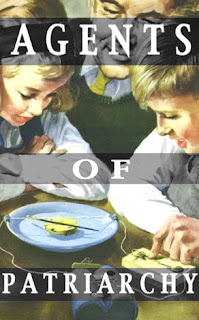
I appropriated from a variety of sources like forties and fifties science books, the National Geographic and “Peter and Jane” books. With my approach being largely inspired by the art of Barbara Kruger and Jenny Holzer's and their statements and aphorisms, I added my own potentially subversive statements to my chosen images. They seemed to give them a transforming charge and power, that suggested to me that art could morally influence the world, challenge the powers that be and challenge/subvert political/public discourse. It was an art of the street, an art that critiqued mass culture, consumerism and official language: military, political, governmental and economic. I fused that language with culled imagery.

I don't think that many believe that art can transform life any more. Okay, so you have Banksy and Posterboy, with their powerful and critical pieces, the true heirs to Grosz, Heartfield, Hoch and Hausmann.

The attacks laid at Holzer and Kruger from some quarters, notably Richard Kostalanetz and Jeremy Gilbert-Rolfe made me question the effectiveness and purposefulness of such art and the making of art. Kostelanetz referred to Holzer's art as 'dull' (2001, p. 290) and Kruger's work as 'advertisements for themselves' (Ibid. p. 354). Gilbert Rolfe compares Holzer's slogans to those of 'Mao Tse-Tung or or the Ayatolloh Khomeni' (1995, p. 30), preferring to view art as 'beyond piety' to borrow from the title of his collection of criticism. The attacks were furious and still leave me unsure in my own mind at the relevance and power of political art.
Ideology and critical discourse aside, I quickly bored with the sort of seemingly uncreative post-modern pictures that that relied upon so much of the past, without the creative challenges of producing a convincing picture. I began to look again at picture making.
Monday, 7 December 2009
Media Technologies and Public Spheres: 2
The second session Wednesday 7 October , 2009: 'The Media and Modernity: Mediation, Technology, Change'.
Here are some of my thoughts on Modernism and Modernity:
The adjective modern refers to the contemporaneous. So in terms of art, all art is modern to those who make it, whether they are the inhabitants of Renaissance Florence or present day Lincoln. Specifically the term Modern refers to a historical period from the mid 19th century to the nineteen seventies. The exact end date for modernism is up for debate, but we could argue the the 1970s represented the beginning of the end.
Modernism is a critical approach that stresses innovation over all criteria. It is characterised by a radical attitude toward both the past and present. Historically we begin in the 18th Century and the Enlightenment and then at a period that has often been called the Age of Revolution (American, French and Industrial) and then in 1848 the year of the Chartists and the revolutions that swept Europe changing peoples attitude to contemporary life. Crucial to the development of modernism was the break down of traditional of financial power-the church, the state, and the aristocratic elite. This meant that artists were more independent and so free to determine the content of their art, refusing to depict paintings with mythological, religious and historical themes (often referred to as Academic Art). Modernism was widely, but not exclusively associated with life in an industrialised society and was often distinguished by its celebration of technology and science (challenged by many modern artists after 1914). Modern Art arose as part of Western society’s attempt to come to terms with the urban, industrial and secular society that emerged from the 19th century. Modern design emerged as a reaction against the declining standards of craftsmanship and to the Art Nouveau movement from the 1880s onwards. Many practitioners recognized the need for new approaches that would enable the mass production of well-made artefacts for mass consumption. It was believed that mechanization and technology, if properly channelled, could change society for the better. Progress seems to be a key word here when in art we see one style succeed another in quick succession. In the late 19th Century and early Twentieth Century we see the content of art shift from realism and naturalism to spirituality, the celebration of technology, the evocation of primitivism and the emptying of art of all identifiable forms. So Modernism cannot be seen as just one movement.
Here are some of my thoughts on Modernism and Modernity:
The adjective modern refers to the contemporaneous. So in terms of art, all art is modern to those who make it, whether they are the inhabitants of Renaissance Florence or present day Lincoln. Specifically the term Modern refers to a historical period from the mid 19th century to the nineteen seventies. The exact end date for modernism is up for debate, but we could argue the the 1970s represented the beginning of the end.
Modernism is a critical approach that stresses innovation over all criteria. It is characterised by a radical attitude toward both the past and present. Historically we begin in the 18th Century and the Enlightenment and then at a period that has often been called the Age of Revolution (American, French and Industrial) and then in 1848 the year of the Chartists and the revolutions that swept Europe changing peoples attitude to contemporary life. Crucial to the development of modernism was the break down of traditional of financial power-the church, the state, and the aristocratic elite. This meant that artists were more independent and so free to determine the content of their art, refusing to depict paintings with mythological, religious and historical themes (often referred to as Academic Art). Modernism was widely, but not exclusively associated with life in an industrialised society and was often distinguished by its celebration of technology and science (challenged by many modern artists after 1914). Modern Art arose as part of Western society’s attempt to come to terms with the urban, industrial and secular society that emerged from the 19th century. Modern design emerged as a reaction against the declining standards of craftsmanship and to the Art Nouveau movement from the 1880s onwards. Many practitioners recognized the need for new approaches that would enable the mass production of well-made artefacts for mass consumption. It was believed that mechanization and technology, if properly channelled, could change society for the better. Progress seems to be a key word here when in art we see one style succeed another in quick succession. In the late 19th Century and early Twentieth Century we see the content of art shift from realism and naturalism to spirituality, the celebration of technology, the evocation of primitivism and the emptying of art of all identifiable forms. So Modernism cannot be seen as just one movement.
Media Technologies and Public Spheres: 1

A representation of the public sphere imagined by Pablo Picasso in his collage Glass and Bottle of Suze (1912).
This entry is little late as the unit has almost been completed. So my comments here are based partly on past notes. This particular unit, 'Media Technologies and Public Sphere' deals with themes such as how media technologies play a central role in shaping the idea of 'public communication'.
It deals with role of newspapers, publications, oil paint, the camera, television, the telegraph, the World Wide Wide, the Internet and radio and there role in shaping public discourse. What is media's significance in liberal-democratic societies? How did the public sphere shape the development of liberal democracies in the west?
The public sphere although may be shaped my mediums discourse like the media technologies mentioned above, there are other 'mediums' that may not be too apparent: the coffee shop from the seventeenth century onwards that emerged sometime between the Commonwealth and the Restoration; the Salon in 18th Century, the pre-Revolutionary France, that emerged in Paris in opposition to court life in Versailles and the café of the nineteenth and twentieth, full of rootless cosmopolitans (that is I think how Stalin described them), revolutionaries and café intellectuals.
The last "medium of discourse" is represented above in a collage by Picasso.
Subscribe to:
Posts (Atom)